Nonhuman perception of change
Leave the World BehindNonhuman perception of change gives the novel a second way to register crisis, one that precedes explanation and often escapes human notice. Animals fall silent, a vast herd gathers at the edge of the yard, and Archie and Rose feel a change in the woods without being able to name it. These moments do not provide a clear diagnosis of what is happening. Instead, they unsettle the assumption that human awareness is the measure of the world, making animals, trees, and children’s bodies bear signs that the adults cannot yet read.
Signs Before Explanation
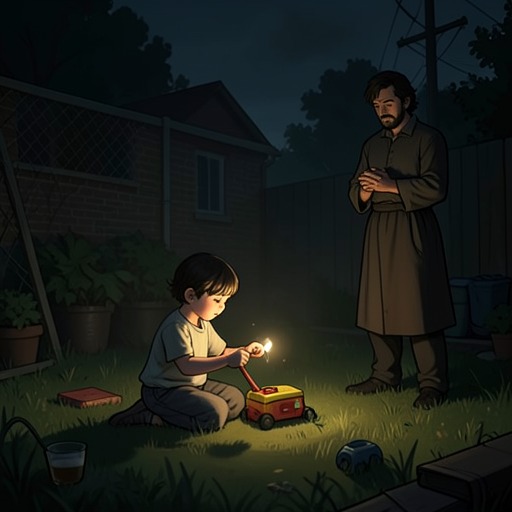
Clay looks out at the backyard on a summer morning that appears entirely ordinary. The storm’s portent seems to have passed, and the wind has abated. Yet the apparent calm contains a discrepancy: the insects have gone quiet and the birds are not calling. The narration makes clear that Clay could have understood the stillness differently if he had been able to look closely enough. It compares the animals’ experience to the temporary shadow of an eclipse, a disturbance they do not understand but nonetheless undergo.
This moment establishes a difference between perceiving a change and explaining it. The animals’ silence is not presented as a conscious report, and Clay does not register it at all. The reader, however, is given access to both the missing sounds and their significance as signs of altered conditions. The ordinary morning therefore carries two simultaneous meanings: to Clay it resembles any other summer day; within the narrative’s wider field of attention, its quiet is a form of response.
Rose and the Deer
Rose’s encounter with the deer makes this difference visible rather than merely audible. Sitting outside, she first sees one animal at the ragged edge of the yard, where the grass gives way to dust, leaves, and weeds. She wants to announce what she has seen, but no one is there to hear her. After looking toward the house and seeing her parents talking, she walks down onto the damp grass. The deer watches her, barely curious.
Only then does Rose realize that the first animal is not alone. As she adjusts her eyes, more deer seem to emerge from the scene: five, then seven, then dozens. The narration enlarges the scale beyond what Rose can see from the yard, suggesting hundreds and ultimately more than a thousand. Her attention is caught between the urge to run inside and tell her parents and the wish to remain still and witness the gathering. The animals are not simply a background against which Rose has a feeling; their startling number gives the scene its own force, exceeding the child’s first interpretation and the limits of what she can count.
Later, when Rose tells Archie what she saw, she emphasizes the difference between a single deer and a great many, estimating a hundred or more and asking whether deer travel in such groups. Archie answers that he knows nothing about deer. His response leaves her observation unresolved rather than converting it into an explanation. The encounter thus passes from private sight to spoken report without becoming knowledge the children can use: Rose has seen something unusual, but neither sibling can say what it means.
The Woods as a Field of Awareness
The woods extend the idea beyond the deer. Rose experiences the light there as altered by the trees and imagines the trees as alive, watchful, and able to communicate among themselves. The narration gives that perception an ecological scale: trees far away, where the ocean has begun to breach the land, are described as dying, though the transformation into pale logs will take years. Mangroves may respond differently, lifting their roots and drawing salt from the ground; the possibility that they, along with alligators, rats, roaches, and snakes, might fare better without humans reverses the usual assumption that nature exists chiefly as a setting for human survival.
This account connects immediate sensory disturbance to slow environmental damage. The woods’ menace is felt by Rose, but the narration ranges beyond what she could know, placing her unease beside distant ecological changes and the possibility of a storm becoming something without an established name. The contrast is important: nonhuman awareness is not presented as a convenient forecast that supplies the children with answers. The trees’ imagined knowledge and the animals’ altered behavior expose human limits, while the causes and extent of the crisis remain uncertain.
The Children’s Bodily Knowledge
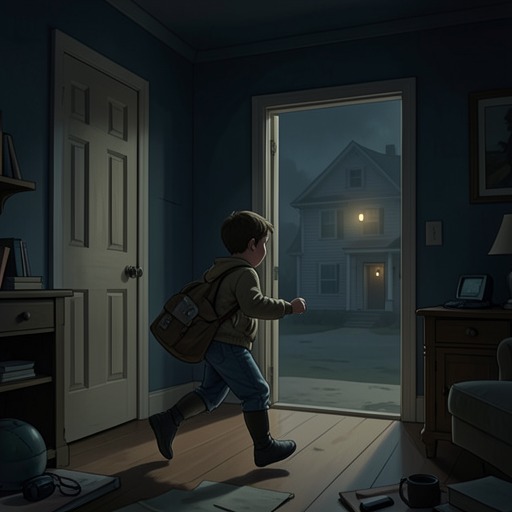
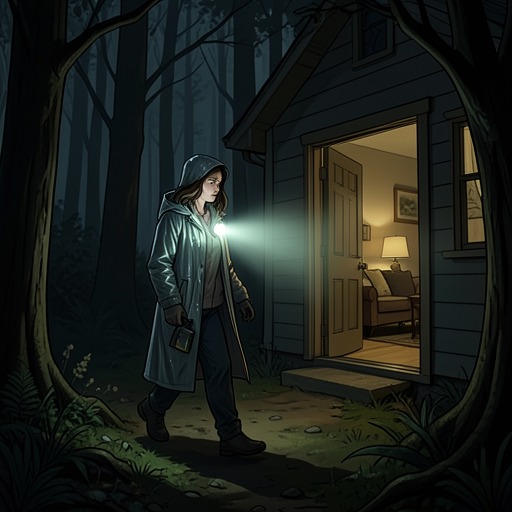
Archie and Rose’s progress through the woods offers another form of perception, one that is bodily and incomplete. They walk without haste, mucking through leaves and shivering a little, while their minds remain unaware of what their bodies seem to register. The narrative places children and the very old together as people who may understand something about the world before they can articulate it, or who may recover such understanding when others no longer listen. In this scene, sensation does not become a theory: the siblings feel the woods differently, but they do not identify the source of that feeling.
They are not truly afraid. The narration describes them as at peace while also insisting that a change is upon both them and the world around them. They exchange words that cannot be made out, a private language belonging to their shared youth, while the leaves shift overhead and unseen insects rustle nearby. The scene keeps human and nonhuman signs in the same acoustic space. The children’s unspoken exchange cannot explain the change any more than the insects can, but their calm bodily presence contrasts with the adults’ need to interpret events and maintain ordinary expectations.
Narrative Significance
Across these scenes, nonhuman perception works as an alternative measure of the crisis. The quiet birds and insects, the deer gathering beyond Rose’s first count, and the woods’ slow environmental transformations all suggest that disturbance exceeds what the human characters can immediately see or name. The narrative does not turn these signs into a dependable code; rather, it makes their partial legibility part of the tension. Rose can witness the herd but cannot explain it, Archie can hear her account but cannot answer her, and Clay passes near his children without knowing they are close enough to reach him.
The effect is a reversal of human-centered attention. What people dismiss, fail to notice, or cannot interpret remains consequential in the surrounding world. Animals respond without offering a human account of their response; trees occupy timescales that dwarf the morning’s apparent normality; and the children’s bodies register unease before their thoughts can give it a name. Nonhuman perception therefore does not solve the novel’s uncertainty. It makes that uncertainty harder to mistake for the absence of change.